
Introduction: Winter is the Ultimate Test
Winter presents the ultimate test for bee colonies. Additionally, this guide explains preparing bee colonies for winter and how to support them.
Preparing for Winter in the Apiary
Winter is the most critical season for your apiary. Additionally, a colony that enters winter weak, hungry, or sick will not survive to see spring. Moreover, Preparation does not start in winter; it is part of preparing bee colonies for winter, starting in late autumn. As a beekeeper, your goal is simple: help your bees become strong, well-fed, and dry. Follow this advisory guide to avoid the most common and costly mistakes.
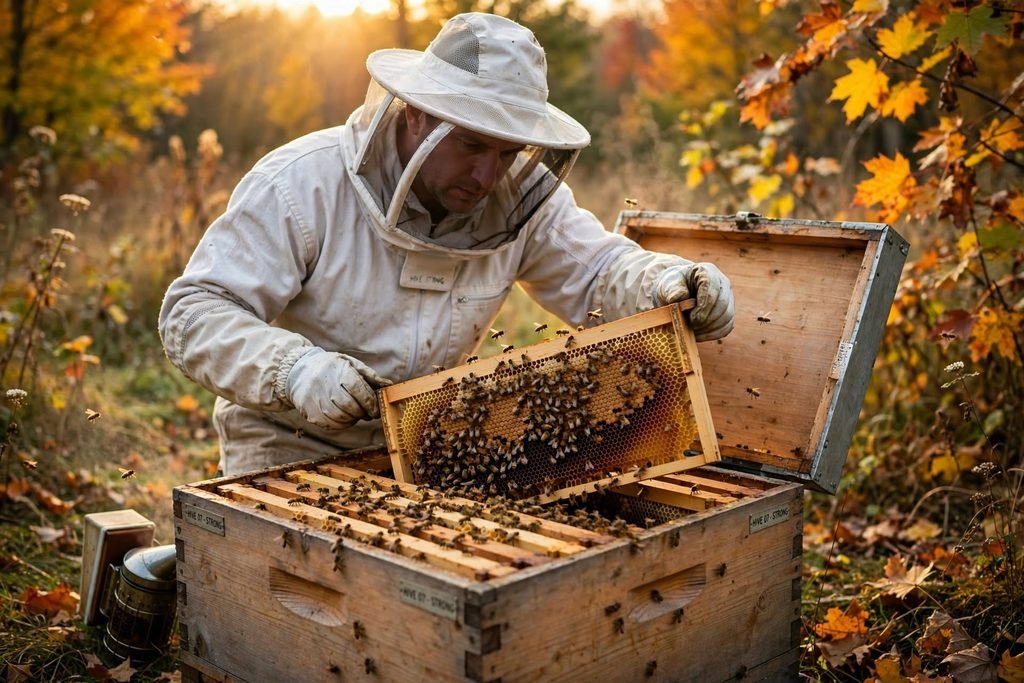
1. Assess Your Colony Strength – Be Honest
Do not try to save every colony. A weak colony will drain your resources and die anyway.
My Advice: In early autumn, inspect every hive.
- A winter-ready colony needs: At least 6-8 frames covered with bees, a young and productive queen (less than 2 years old), and 3-4 frames of brood in a solid pattern.
- What to avoid: Never combine a diseased colony with a healthy one. If a colony is too weak (less than 4 frames of bees), unite it with a stronger one using the newspaper method. A strong colony is always better than two weak ones.
2. Ensure Abundant Food Stores – Starvation is the #1 Killer
Bees do not die from cold alone; they die from cold because they starve and cannot generate heat.
My Advice: Leave enough honey. You need 15-20 kg of capped honey per colony for a mild winter like in Riyadh and central Saudi Arabia, and up to 25-30 kg for colder northern regions.
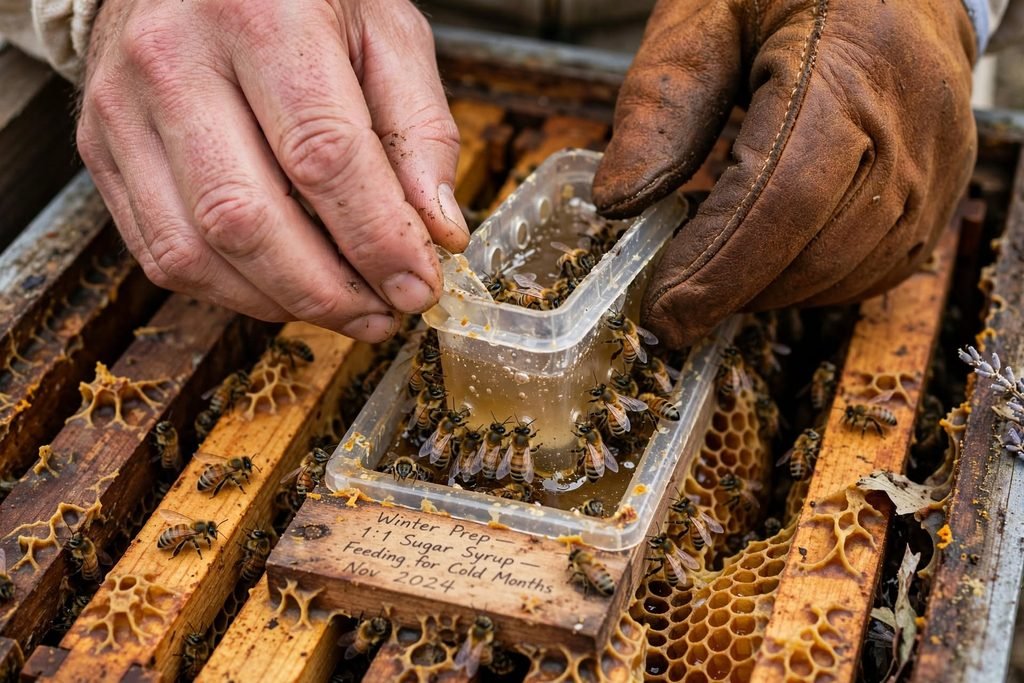
- If stores are low, start feeding early with heavy syrup (2 parts sugar : 1 part water) in September-October. Do not feed thin syrup late in the season – it adds excess moisture to the hive.
- Finish all liquid feeding before temperatures drop below 10°C. After that, use solid fondant or sugar candy placed directly above the cluster.
3. Control Varroa Mites – Your Most Dangerous Enemy
A colony with high Varroa load in autumn will not survive winter, even with plenty of food. Mites transmit viruses that shorten the life of your winter bees.
My Advice: Treat in late summer after the last honey harvest. This is non-negotiable.
- Test your mite load using an alcohol wash. If you see more than 2-3 mites per 100 bees, you must treat immediately.
- Use an approved organic treatment like Oxalic acid (trickling or vaporization) or Formic acid when brood is minimal. Follow the dosage exactly.
4. Manage Moisture, Not Just Cold
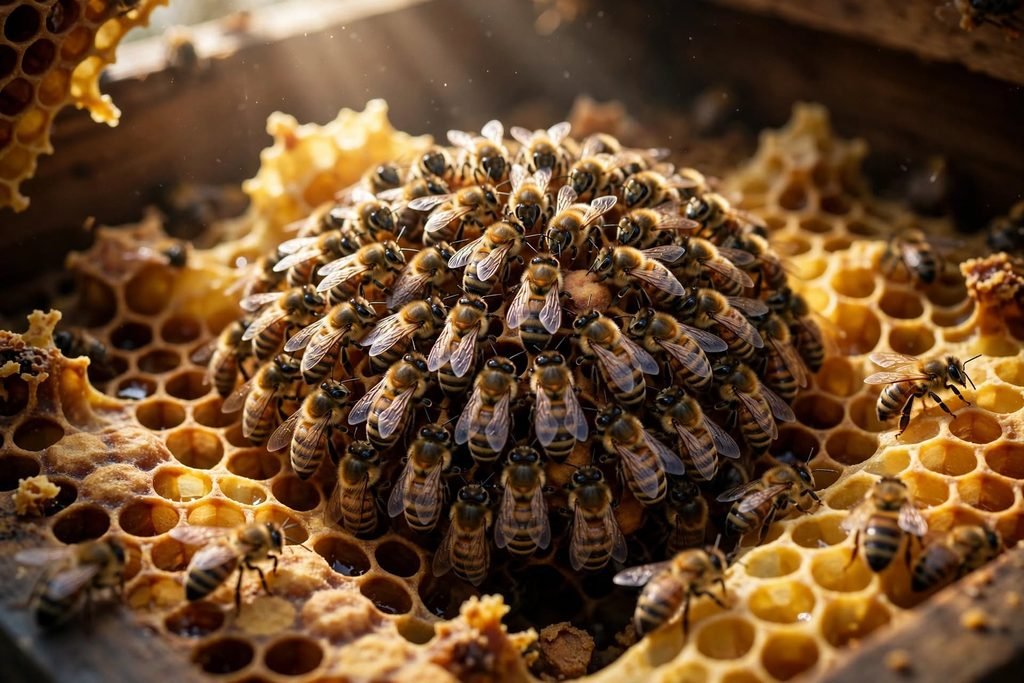
This is the mistake that kills most beginners. Bees can tolerate cold, but they cannot tolerate cold + wet. Condensation dripping on the winter cluster is lethal.
My Advice:
- Ventilation is crucial: Provide slight upper ventilation. A small upper entrance or a notched inner cover allows moist air to escape.
- Tilt your hives forward: Tilt hives slightly forward (2-3 degrees) so any condensation runs to the front wall and out, not onto the bees.
- Use a moisture board: Place an absorbent quilt box or moisture board under the outer cover.
5. Prepare the Hive Physically
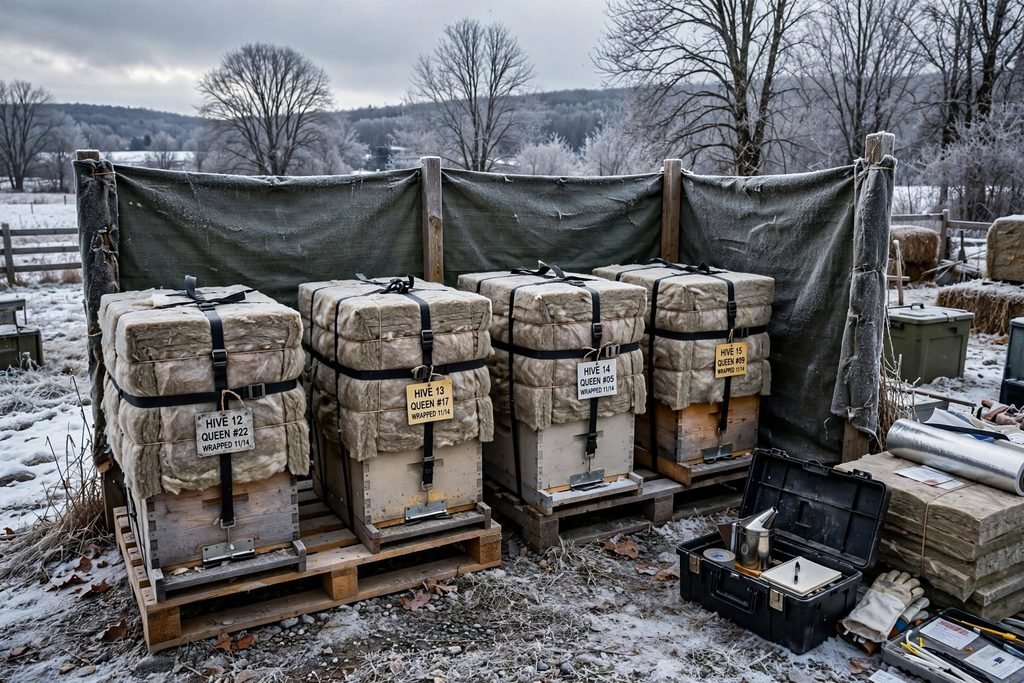
- Windbreak: northern winds can be harsh. Place hives behind a wall or create a windbreak with fabric. Do not place hives in low areas where cold air collects.
- Reduce the entrance: Install a mouse guard and reduce the entrance to 2-3 cm. This prevents mice and robbing by other bees, and helps the colony defend and keep warm.
- Remove empty supers: Remove any empty honey supers. A smaller space is easier for the bees to keep warm. Only leave what they need.
6. Final Winter Checklist – Do This Before December
- Queen present and laying well?
- At least 15kg of capped honey stores?
- Varroa treated and mite count low?
- Hive dry, ventilated, and slightly tilted?
- Entrance reduced and mouse guard installed?
- Apiary clean of debris and dead bees?
What NOT to do in winter: Do not open the hive frequently. Do not open it on cold, windy, or rainy days. If you must check, do a quick 10-second check from the top on a warm day (above 15°C) without pulling frames.
Conclusion
A successful spring starts with a disciplined autumn. A well-prepared colony will emerge in February strong, healthy, and ready to build up quickly for the early nectar flow. Take the time now, and you will save your bees and your investment.