Introduction
Honey bees are more than honey makers. They are architects, chemists, nurses, and farmers. Learning to work with them through honey bee handling is less about controlling them and more about understanding their language.
1. Understanding the Colony
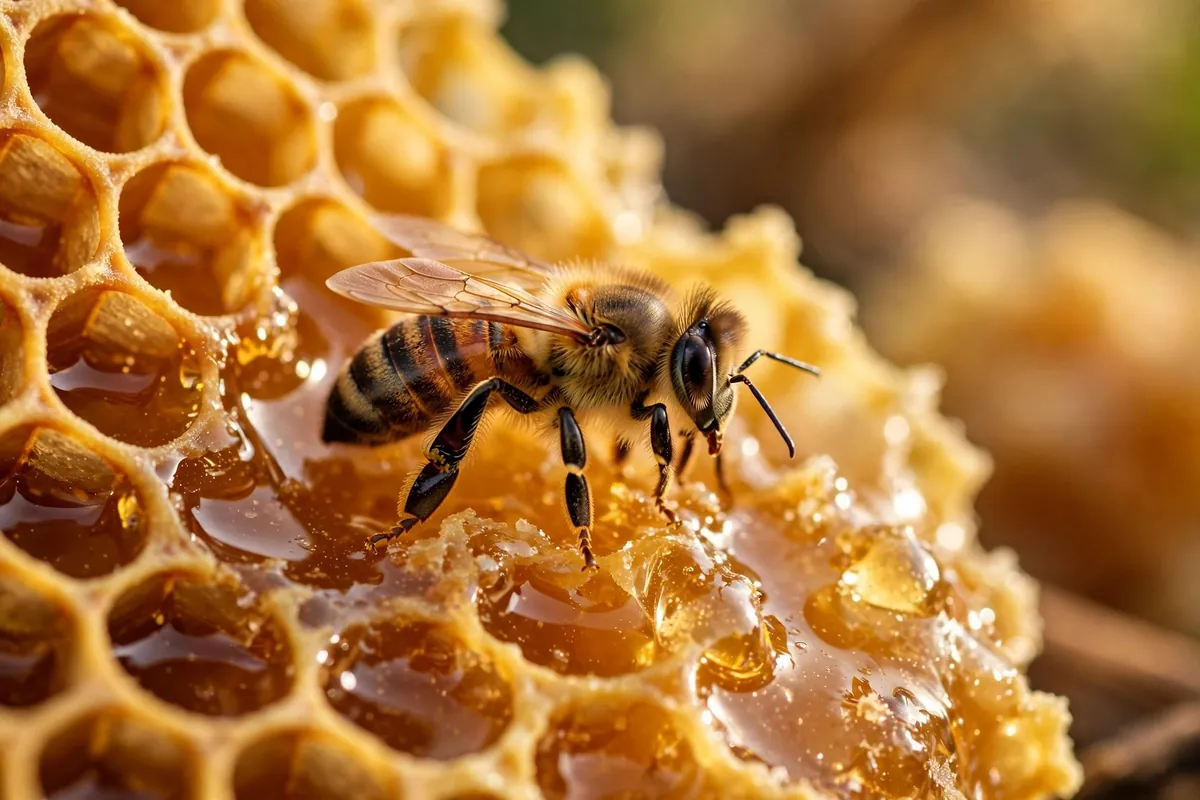
A hive is a single superorganism. The Queen lays up to 2,000 eggs a day. Workers do everything. Drones mate. Bees are defensive, not aggressive.
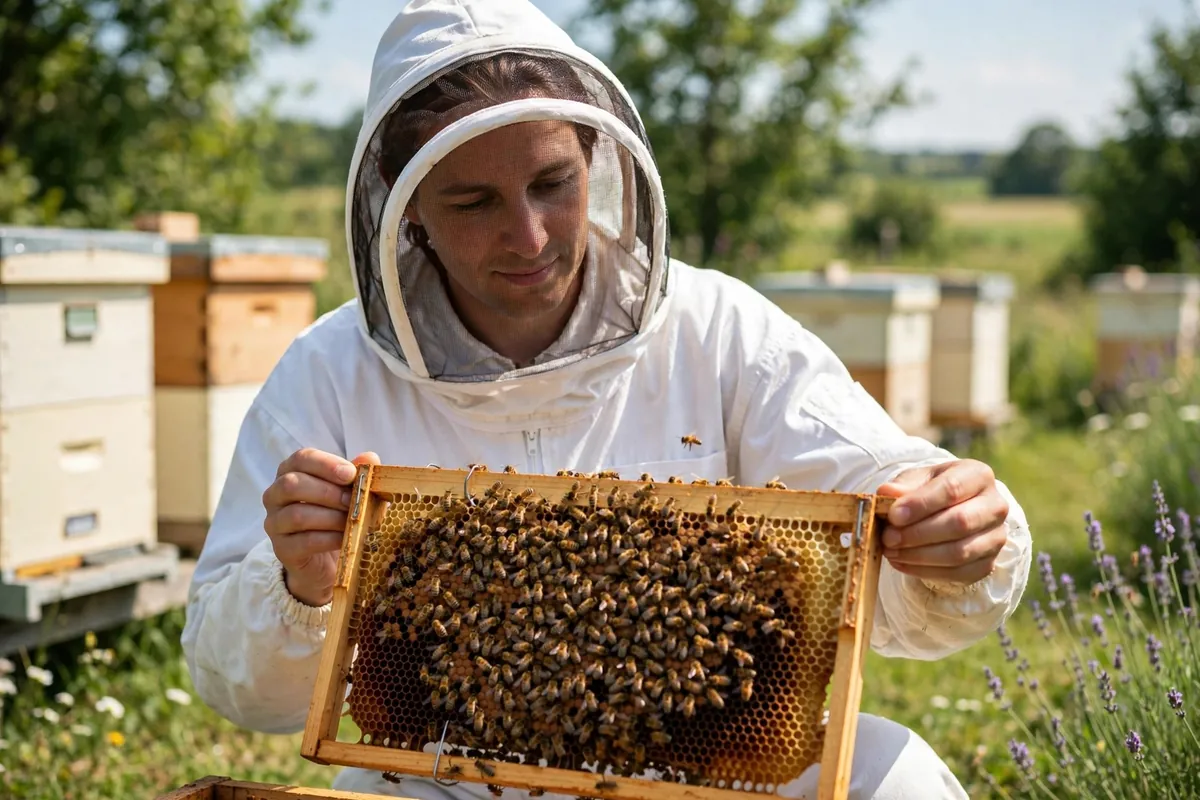
The art of handling: a calm beekeeper inspecting a frame – patience over force.
2. The Art of Handling: Patience Over Force
Typically, timing is 10 AM–2 PM on warm sunny days.
Additionally, cool white smoke masks alarm pheromones.
Additionally, use light colors and slow movements; never blow on a bee.
Moreover, respect the brood: take only surplus honey, leave 8–10 kg.
Additionally, provide shade and water.
3. The Six Gifts of the Hive
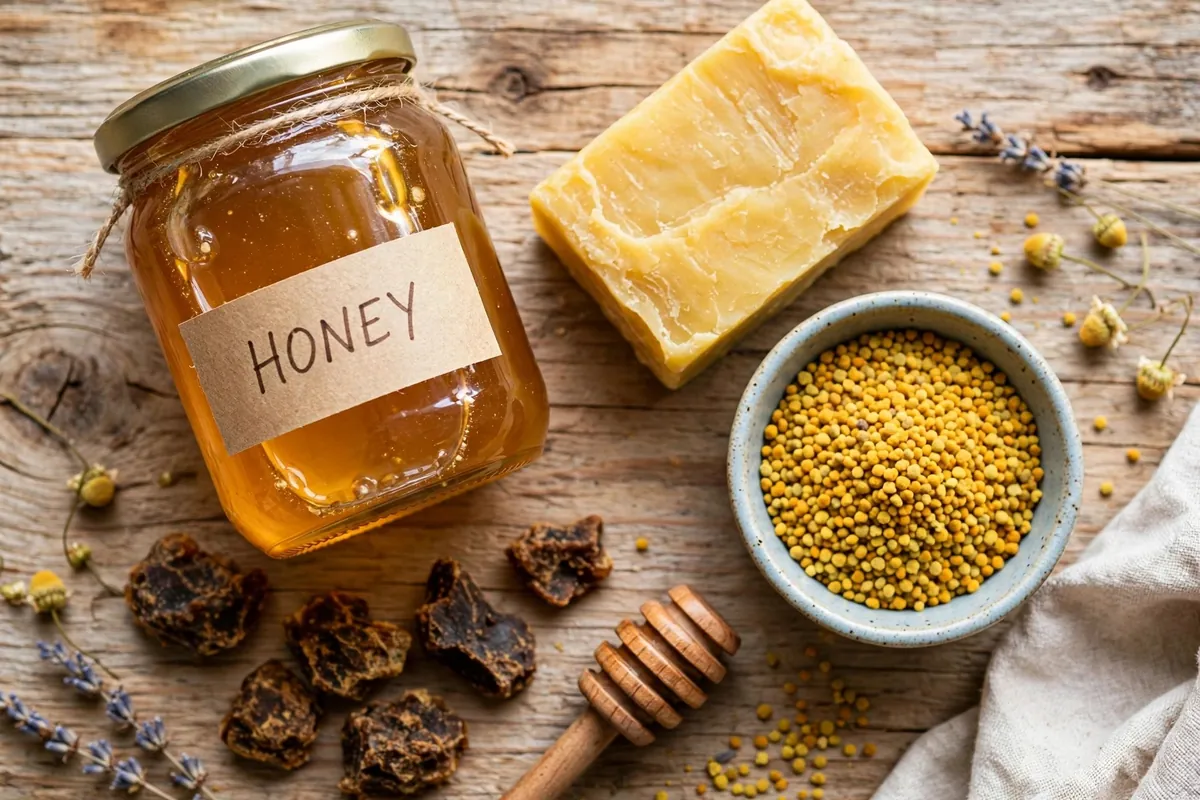
The six gifts: honey, beeswax, propolis, pollen, royal jelly – nature’s pharmacy.
| Product | What It Is | How To Benefit |
| Honey | Nectar concentrated by bees | For sore throats, energy. Store in glass, dark. Never >40°C. |
| Beeswax | Wax for building combs | Natural balms, creams, candles. |
| Propolis | Tree resin + wax | Antiseptic, antioxidant. |
| Pollen | Flower pollen | Superfood, test for allergy. |
| Royal Jelly | Milky secretion | 0.5g daily, keep frozen. |
| Bee Venom | Compound in sting | Apitherapy under medical supervision. |
3 Practical Tips
Learn with a local beekeeper first to improve honey bee handling. Use extractor and return combs to save 80% energy. Diversify: sell propolis, pollen, and wax wraps.